Sunday, June 30, 2013

A Shocking Moment


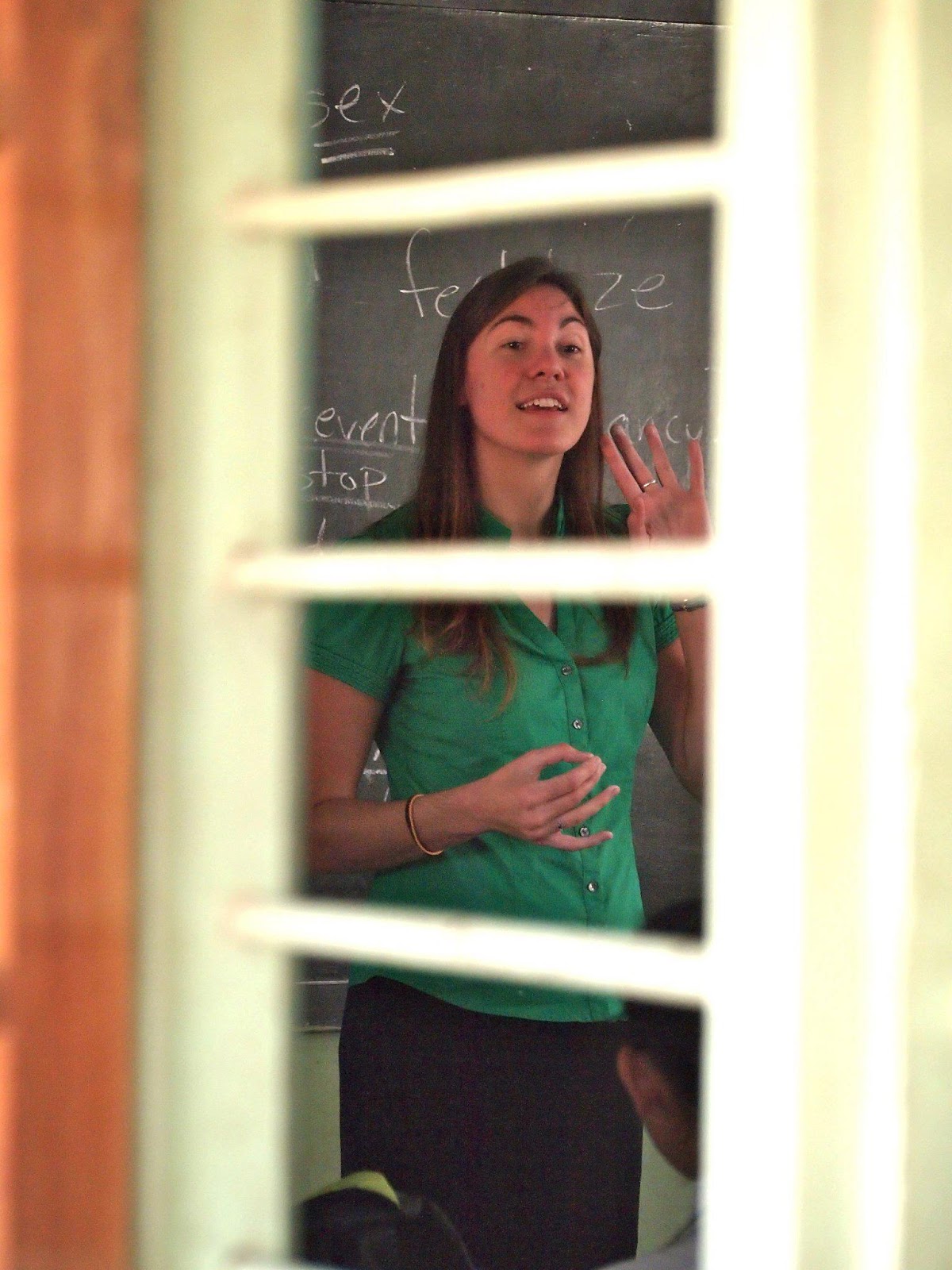
This month, I’ve been teaching an after-school intensive course to my 7th grade students. The course is supposed to be for students who are behind their peers in their English skills, so that they can work towards catching up.

There’s a student in one of my 7th-grade class who I’ll call Henry. He’s adorable, new to the school, and very shy. He has made some friends, but in class he’s very quiet and does not like to open his mouth whatsoever. I believe this is mostly because his English skills are very poor. Reading, writing, listening, speaking—they’re all extremely basic, so he has a lot of trouble keeping up in class.

But luckily, Henry’s taking the intensive course I’m teaching, so my hope, within reason, is to bring him up to speed with some of his peers. Throughout the course so far, I’ve seen him gaining some confidence in his speaking skills, which is very exciting. And the other day I jumped at the opportunity when I got a chance to work with him individually: the students were working on a word-search, and everyone in the class (perhaps with some help from peers) was capable of completing it. They were having fun and had naturally formed small groups to work in. However, I noticed Henry struggling, and knew the word search was too difficult for him. So I called him over to some empty seats towards the back of the room and sat with him for a little bit of one-on-one time. I had been looking for a chance to do this, since it’s a very rare opportunity (between all the classes I have, I teach roughly 200 students!).

I started with basics.

“What’s your name?”

“Henry.”

“How old are you?”

That one was a little more difficult. I tried in Thai:

“Ayu tao rai?”

“Twelve.”

I thought, ok, perfect. He can recognize some basic questions. I’ll write down the English translation to a few basic things like this, and then ask him to write the Thai translation next to the English, so he can remember. So I said,

“Write, “How old are you?” in Thai in your notebook.”

Oops, forgot. He doesn’t speak English. I try again, this time in Thai:

“Kian “ayu tao rai” ti ni” (write “how old are you” here)

He jotted down a few Thai letters, but even though I can’t read Thai well, I could see clearly didn’t complete the sentence. I tried again, as clear as I could be:

“Kiaan “ayu tao rai” ti nii”

He looked at me, seemingly not understanding what to do. But the funny thing was, I was sure I that what I had said was a correct and clear sentence in Thai. I start thinking to myself, what’s the problem here?

Ok. He wrote a few letters...but not the whole sentence. He looked like he wanted to write something down, but just wasn’t doing it. I’m thinking, I’m thinking...wait at second...could it be?

“Kian pasaa tai dai mai?” (Can you write Thai?)

He bashfully shakes his head. “Mai” (no)

“An pasaa tai dia mai?” (Can you read Thai?)

Again, he shakes his head.

Oh my god, I think to myself, while trying to suppress a look of shock and disbelief on my face. Henry doesn’t only struggle in English. He’s illiterate in his own language. And he’s in 7th grade. And he just started going to one of the better schools in town. And he’s illiterate. Holy crap.

It took me a while to conceptualize this. It’s not something I thought I’d run into where I work. To be honest, I didn’t ever really think about it at all. So, what can I do? Well, a wise teacher told me that you have to meet your students where they’re at, not where you wish they were. So, as much as I can, I’ll start with the only thing I can—the basics. Since I found out Henry is illiterate, I’ve been working slowly with him on English letters (which he knows the names of) and the sounds that they make (which he doesn’t know yet). Slowly, one tiny step at a time, I hope to get him reading some basic English words. And I will also get him help with learning to read and write his own language. My greatest hope is that he begins 8th grade in a very different place than where he began 7th. I’ll let you know how it goes.

Sunday, May 19, 2013

Travels, Travels


So, as I wrote in my previous post, I did some traveling this summer. I ended up spending three weeks in India, about a month in Nepal, and then topped it off with a week at the beach in southern Thailand. I had a terrible, horrible, no good, very bad time.

Just kidding. It was absolutely amazing. I cannot relay all of my experiences in a single post, but I’ll try to give some anecdotes over time that sum up the experiences I had.

Montfort School in Jongla, Meghalaya
I’ll begin at the beginning—India. My friend and coworker Emma and I taught at a school in a very small village in the northeast part of India. I originally thought I’d be teaching there for about three weeks, but due to timing and holidays, I unfortunately only got to teach for a week and a half. Nonetheless, I was totally blown away by the experience.

I ended up teaching quite a smattering of classes—English, health education, general knowledge, and chemistry. In English I played some fun, 

never-before-seen games both inside and outside of the classroom, including one in which, to the students’ great amusement, the short, stout school director stood in front of the classroom and tried to mime being a giraffe. In health education, I got to shock the 9th-graders a bit by giving an impromptu lesson on safe sex (while I was really supposed to be teaching a bit of a rigid curriculum about “body changes” during puberty). It was good fun to see eyes popping out of the 14-year-olds’ skulls, but I have to say my favorite class was chemistry. And I was lucky to be teaching the same topic as I had taught during my student teaching days—chemical reactions. I was reinvigorated by teaching something I know so well and love so much
                                   
Although I only taught for a week and a half, I became comfortable with the students quickly and developed quite a fondness towards them. What wonderful kids. Wonderful. It occupied a lot of cognitive space during my stay there, knowing how different these kids’ lives were from the life I led growing up. Shoddy electricity, little money, very basic amenities, virtually no motorized road transportation, no travel... Yet, here they were everyday, filling their brains with some hopefully useful information, skills and habits. For this, I had a tremendous amount of respect for them.


To say the least, I loved working with the kids at the school, and it became clear that they loved me too when they offered me something so precious as a goodbye present.

It was my last day at the school. I was sitting in the teachers’ office, showing some of the teachers how to cut out paper snowflakes (they had never seen this before were completely enthralled with it), when the 9th-grade homeroom teacher called Emma and me into her classroom.

We stood at the front of the room, facing the students who were all standing as well. They had written a personalized goodbye song for us, and they sang it beautifully with the accompaniment of an old, beat-up guitar. I was touched. I teared up. Some of the girls in the back were crying as well. It was one of the best presents I have every received. It has become a memory that will always stick with me, and will constantly serve as a reminder for me of a very important lesson—that what I do, what we all do, makes a difference.

Big or small, we affect the world and the people around us. Sometimes we think we’re just having a good time, moving through life without much aim or intention. We pass by people in our lives and don’t think anything of it. But we make a difference. In the people we interact with, teach, learn from, lead, follow...we make a difference. It’s truly in the little things that differences occur: a short interaction; an act of kindness; a show of generosity or understanding; the giving of time. We are the sum of the people we have met, and you better believe that you are included in the sums of many people’s lives that you’ve met.

 “Act as if what you do makes a difference. It does.” –William James


Monday, March 11, 2013

Pigs, Parties and Plans


1. Sorry for not updating this blog for such a long time! I have no excuse to offer.

2. A snapshot of village life:

Ga's aunt's house, where we stayed for the weekend

This past weekend, I went to a small village in a neighboring province, which is the hometown of a good friend, Ga. She and her husband, Orlando (also a good friend, and fellow teacher), invited me along for a big celebration that the village holds every few years, when all the townsfolk come back from working in far-away places to spend the weekend with friends, family, and a beer in hand. In short, it was awesome.
A road in the village. Hello, buffalo!


When we arrived Friday afternoon, Orlando and I moseyed down the town’s narrow dirt roads while sipping on cold Leo beers, checking out the local flora. Eventually we were beckoned by some villagers to try some of their homemade rice wine—“sato.” It’s kind of like hard lemonade, except better and significantly more dangerous. Needless to say, a good start to the weekend.


Later that evening, while relaxing after dinner, we heard a high-pitched squealing sound. Ga correctly identified the sound as a pig dying, so of course we went to check it out. After wandering around in the direction where the squealing had come from, we found the house where the little piggy had met its end. When we arrived, they were singing off its hair in preparation for the butchering. When the pig was sufficiently hairless, a few men make quick work of the body—first cutting into the neck and severing the head about halfway, then opening up the sternum and belly to remove the sac of organs contained within. After separating out the liver and pouring the blood that had filled the body cavity into a pot (nothing goes to waste), they cut the head clean off and quartered the rest of the body. Soon enough, we were sitting down to generous supply of beer and the freshest, most deliciously succulent grilled pork I’ve ever tasted.

Making breakfast. I was strongly encouraged by multiple
people to eat as much as I could, as the ensuing day would
 consist of much alcohol imbibition
(yes, that's a real word)
The next day was the real highlight of the weekend—a massive drum procession. In the middle of the day, under the glaring sun, people gathered at the village’s church to participate. When the drums struck up and the music started blaring, the procession began. The music was loud, the sun was hot, and the people were celebrating as if it was one of their final days on earth. Everyone danced with abandon and drank to their heart’s content, and the procession grew into a teeming, writhing mass of people as it moved through the village, picking up more and more people as time went on. Time and worries were forgotten, replaced with perfect happiness.

The day was topped off by a Molum concert that night (Molum is traditional Isan music, Isan being the region of Thailand where I’m living). The music was good, the backup dancers were...well...bouncy, and, true to form, the concert was interrupted several times by fights that broke out between drunken men dancing in front of the stage.

Overall, it was a very traditional celebration for a very traditional little old Isan village, and I feel super lucky to have been present to experience it all.

3. An update on my future plans:

Well, my school year ended on March 1st, and I now have a full year of teaching under my belt. Holy moley I have learned SO MUCH!—about teaching, living, being flexible, Thailand, and more. I (hopefully obviously) absolutely love living here, so I have decided to stay for at least another year.

Now I’m off for summer vacation and plan to make the most of it. In a few days I’m off to India for about three weeks. I’ll be volunteering at a very rural school in northeastern India (in a small village near a town called Resubelpara), teaching English and hopefully some chemistry. After that, I’ll make a pit stop to see the Taj Mahal, and then it’s off to Nepal for two or three weeks to trek to the base camp of Mt. Everest and hopefully travel around a bit. Wish me luck!

Tuesday, December 4, 2012

Sports Day

GOTTA love the awkward band members in their onesies!
Sports Day is an event that happens each year around the end of November/beginning of December. It occurs at all schools throughout Thailand, with most schools holding celebrations for three days in a row! I cannot imagine what schools do to fill up three whole days...at ACU we only had one day of festivities, which was plenty.


Students practicing cheering
Sports day runs as such: there are four “teams,” with students from various grades (1st through 12th) on each team. The team colors at ACU were blue, purple, orange and red (I was orange—GO ORANGE! Our team theme was “Halloween.” A bit late in the season, considering Sports Day happened after Thanksgiving...but that’s Thailand for you.). The teams had competed in various sports and dance competitions throughout the year, earning their teams points along the way. The culmination of all this was the official Sports Day, when the REAL competition is held—the cheering competition! Yes, that’s right, cheering is by far the biggest deal. And it’s a BIG DEAL. BIG. Like, a big enough deal that for the two weeks prior to Sports Day, all classes were shortened to make room for a 45-minute period at the end of each day simply to practice cheering.


Some of my Pratom 6 (6th grade) students
decked out for the morning parade


Track competition. Go go go!
The day was little bit boring, but there was much to take in. There was a parade down the main road of Ubon, complete with awkward high school marching band, bedazzled marchers, and slightly lack-luster flag bearers; a dancing competition for which I was a judge (although, I must say, it was difficult to judge four groups of 50 students all doing the exact same thing...); many track races on a chalk-line track laid down on the school’s soccer field (I ran in the teacher’s relay, and won gold!); primary students hula-hooping to the tune of gangnam style (I probably heard this song at least 23 times on Sports Day alone); and three separate rounds of cheering competitions.

The day ended with all students eagerly huddled on the soccer field, awaiting the results of who won sports day (which actually means, who won the cheering competition). And, drum roll please...ORANGE WON IT! I wasn’t surprised, because their cheer/dance sequence was pretty epic. Although Halloween was over a month ago in the hearts of American kids everywhere, the spirit was still alive and well in the orange team cheerers and dancers.


Mini hula-hoopers

Go Orange! These are the cheerleaders
And these are the cheerers. The students put these stands together themselves--quite impressive! I love the grim reaper lingering in the foreground

Monday, November 26, 2012

I was warned


I was warned at the beginning of this school year (by fellow teachers) that students would miss many classes due to various activities. I was warned that the first semester wouldn’t be too bad, but that during second semester school would become a bit of a joke because of the sheer number of missed classes. I was warned that this would be frustrating.

Guess what? It is.

It’s been five and a half weeks since the beginning of the term. I teach 17 class periods per week, so that’s a total of 92 classes. One day was a holiday, so supposedly I’ve taught 89 classes since the beginning of term.

How many do you think I’ve actually taught?

Due to Scout Camps, testing, Sports Day (more on this in a future post—it’s this upcoming Friday), cleaning, field trips, etc, I’ve missed 23 classes. Of the 89 classes I’ve had, I’ve only taught 66! That’s about three quarters! 75%! (Can you tell I’m teaching conversions between fractions and percentages in my 6th grade math class?)

During the first semester, I would show up every once in a while to an empty classroom, and just return to my office, shrugging my shoulders and feeling somewhat of a guilty pleasure in not having to teach class. Missing class set me back as far as class work went, but I mean, really—who complains when they find out they are relieved of their duties?

Well, now, I guess I do.

Today I arrived at one of my classes ready to go. It was my Matayom four (10th grade) English reading and writing class, and it’s my favorite. The students are awesome—little darlings, and always make me smile. I ushered them into the classroom, got them settled down, and found out how their weekends went. They took out their pens and pencils, notebooks and pieces of paper. I was at the board, writing out my first general correction for them on a recent descriptive writing assignment they had, when I heard a knock at the door.

In extremely rough English, an older student asked if my students (all 39 of them) could leave class to go practice cheering for Sports Day (yes, you read that right—practice cheering. There aren’t actually sports on sports day, just a lot of dancing and cheering. Again, I’ll tell more when the actually day happens, this Friday.) After entertaining the idea for about 2 seconds, I said no. During first semester, I definitely would have said yes. I would have pretended to consider the notion, pausing for enough time to make everyone think I might say no, and then relent and let the class take off to do whatever was required of them. But now, I’m tired of missing class. I’m tired of feeling like I’m not giving my students the education they deserve because frequent random events keep preventing me from teaching. So I said no.

After shooing the older student out the door, I got back to my point at the board. My pen was about to touch the whiteboard when two more students showed up. These two were more insistent, and had better English. “Now,” one of the students said. Now students practice.” A few moments later, my Thai co-teacher showed up, and confirmed that the students did, indeed, need to go practice; that they couldn’t stay in class. So I let them go. To practice. Cheering.

Ugh.

I teach this particular class twice per week—Tuesdays and Fridays. They missed class today (Tuesday). They will also miss class on Friday due to Sports Day. Of the twelve classes they should have had so far this semester, they will only have attended seven.

I was warned. I was warned that missed classes would increase during the second semester. I was warned it would be frustrating. I was not misled.


My students, practicing dancing and cheering for Sports Day
(although this is frustrating, aren't they adorable? The colorful shirts and red pants are their "sports outfits," worn every Friday and days they have gym class, and the white shirts and dark blue bottoms are what they wear every other day. This is a hodgepodge of many classes, not just mine.)

My resulting empty classroom :/

Friday, November 2, 2012

Indonesia: Below the Equator, Below the Water's Surface


My dad came to visit me last month, and it was a delight and a pleasure to have him around. Before his arrival, I was nervous about how we would both react to being in such close quarters for such a long time (over a month of sleeping in the same room, eating together, making decisions together, etc), but everything worked out more than alright—we adjusted quickly and easily to each other’s company, and ended up having an exceptionally good time throughout our travels. My dad spent some time in Ubon, and while he was here we took a weekend trip to Pakse, Laos, during which we got a feel of the small city and also went to Wat Phu and Tadlo waterfall. Our big adventure, though, was our two-and-a-half-week trip to Indonesia.

Although two and a half weeks is not really much time, my dad and I were able to see a wide variety of things and places. Before arriving, we had an idea of what we wanted to do, but throughout our trip we flew by the seat of our pants, deciding each day what to do the next. This worked splendidly! Here’s a quick rundown of our itinerary:

-       Arrived in Jakarta via plane, but only spent the night (in a super creepy hotel)
-       Hopped on a train the next day, going about halfway across Java to Yogyakarta—awesome train ride, and awesome city! Saw Prambanan Hindu Temple, Borobudur Buddhist Temple, some lively street performers, and cool sights around the city
-       Took a three-day trip across the rest of Java, stopping at the volcanoes Bromo and Ijen, and getting QUITE jostled about during some very bumpy van rides along the way
-       Took a mixture of ferry, bus, and taxi to Ubud on Bali. Saw the Sacred Monkey Forest, traditional Balinese dancing, and some gorgeous rice fields.
-       Took taxi to Padangbai, on the eastern tip of Bali, and prepared for a relaxing end to our trip—the beach!
-       Took the fastboat to Gili Air—an island off of Lombok. PARADISE. Spent 5 days in paradise. (NB: Planning on moving to paradise someday.)
-       Spent our last night back in Bali in Kuta. Compared to paradise, awful. A shocking stir back to reality, but interesting nonetheless.

I could write at length about any of the many experiences I had, but instead I will focus on one aspect of the trip that I enjoyed more than any other: my interactions with people. The places and things I saw were incredible, but it was the people with whom I interacted who really made the trip for me. From stall owners to taxi drivers to hotel workers, the people of Indonesia were, in my experience, extremely helpful, friendly, and outgoing.

Three of the men who worked at our bungalows
By far my favorite group of people was the group of young men who worked at the bungalows that my dad and I stayed at on Gili Air. We stayed on the island for 5 nights, so we came to know this group a little bit beyond the 2-minute paying-the-bill conversation. I wont try to reproduce what little I learned of their lives here, but rather to convey the joy I took from getting to know a group of people as themselves and what their lives were like, and not just as a few more faces in the sea that one wades through while traveling.

We grew to be on such friendly terms with the owner of the bungalows that he actually took us to his niece’s wedding. It was an unexpected treat to see a Muslim wedding, and then to enjoy some roasted chicken back at the bungalow owner’s house later that night. Of course, the wine was eventually brought out, along with mango for dessert (the bungalow staff quickly learned that this is my all-time favorite thing haha), and then some easy guitar strumming and singing among friends and family on his airy second-floor deck until late into the night.

The local fare--fish and tempe in sambal, rice,
veggies, and of course, freshly-picked mango! 
Along with the owner of the bungalows, the staff was equally as friendly and open. They gave us unsolicited drinks on-the-house at dinner; invited me behind the bar to teach them how to mix a new drink or two (tequila sunrise, anyone?); readily offered a taste and even a whole plate of what they were eating for breakfast or lunch, as opposed to the tourist fare (I loved getting a taste of what the locals ate—fresh fish and friend tempe coated in a delicious, spicy sambal sauce, with rice and veggies on the side); invited us out back to try snacks they were munching on from the market in town; took us to the mango orchard a few times to try our hand at climbing trees and picking fruit (mango, coconut, rose apple); and readily sat down in their free time to play a few hands of cards, both American- and Indonesian-style. Their 
hospitality, friendliness, and familiness were striking, 
and more than I could have hoped for.


Dad getting a quick haircut (after a bit of an ordeal of trying to find a pair of scissors)

This experience made me contemplate my goals over here on the other side of the world. One of my ultimate goals is to experience other cultures. My initial assertion was that in order to truly experience another culture, one must live in it and not simply travel through it; this is why I came to Southeast Asia as a teacher and not as a tourist—so I could take a peek at the iceberg from below the water’s surface. So far, I’ve found my assertion to be true. Case-in-point: our 5-day stay at Gili Air. This was roughly a third of our trip that we spent in once place, saying good morning and goodnight to the same people every day. Even in this short span, I came to know these people better than anyone else on our trip, and in a very positive way.

Getting to know the people surrounding oneself as individuals, and not simply faces or services, truly heightens and broadens an experience. There is no higher or broader an experience can get than life lived for an extended period of time in one place. Only in this way does one come to know their surroundings and the characters of the people around them. If you’ve spoken to me in the past six months, this goes without saying, but I’m so happy that I came to live in Thailand, and I’m not planning on returning to the US anytime soon. Of course there are good times as well as bad, but all-in-all I love what my life has become—a non-stop “experience” of the highest and broadest kind. And, I suppose and hope, it will only continue to grow.

Sunrise in front of our bungalows. Did I mention this place is paradise?

Sunday, August 26, 2012

A Moment of Zen, or something like that


This morning (Sunday) I took a little bike ride over to an eye clinic to get my eye checked out. It’s been red, so I thought I’d go see if I could get some drops to cure whatever’s ailing it.

The clinic is open in the evenings and on the weekends, and is generally quite busy. I came to this clinic once before, and the wait time was about 3 hours (!), so this time I decided to show up early. The clinic opens at 9:30; I got there a bit after 9 to secure my spot in the queue. I suppose I shouldn’t have been surprised that other people had had the same idea, because when I got to the clinic there was already a small crowd. Nonetheless, my wait time was significantly shorter than my last visit, and I was actually happy to wait. Why, you might ask? I have one question for you.

Do you know who else goes to eye clinics 20 minutes before they open on Sunday mornings? Old people.

I savor a good crowd to people-watch, and old folks generally fall near the top of my list. I’ve noticed this is particularly true here in Thailand because customs, dress, mannerisms, and all-around ways of doing things differ from the US in the most subtle but interesting ways. Also, there’s something different, in a good way, about watching a crowd of people who don’t speak the same language as you; relying purely on physical communication, facial expression, and gesture to interpret what’s going on is a fun and typically comically rewarding challenge.

After waiting for about half an hour in the main waiting room, my name was called and I was ushered into a second waiting room. This room held about 10 patients and two technicians at a time. The patients were made to sit on these little yellow stools along the walls, with everyone facing the center of the room—a perfect people-watching vantage point. The technicians were busy testing people’s eyesight, taking pictures of people’s eyes, giving folks eye drops, etc., all before they got called in to see the doctor. Amongst all the testing and dropping, the room functioned as such: when a person was called in to see the doctor, everyone shifted one stool to their right, and so on and so forth around the room until everyone eventually reached that exciting stool right next to the doctor’s door.

During my 30 minutes or so in this second waiting room, here are a few of the observations I made:

One technician was trying, with difficulty, to take a picture of an elderly man’s eye. I’m not sure what his eye problem was, or why it was apparently so difficult to take the picture, but at any rate there was a lot of talking... or rather, there was a lot of yelling, because the man could not hear well at all. I had to suppress my laughter at the sight of this young female technician yelling instructions (in Thai, of course) at this old man, trying to get him to adjust his head and eyeball alignment so she could capture the picture. A few of the other people sitting nearby were trying to help in some way or another, gesturing this way and that or attempting to reiterate what the technician was saying.

There was also a middle-aged man was there with an older woman who was presumably his mother. At one point, he was blocking the line of sight for people getting their eyesight tested. He was focused on getting his mother safely onto one of the very short stools, and wasn’t really paying attention to what was going on around him. The technician was politely but loudly instructing him to move out of the way, other people who were closer to him were trying to relay the same message, and the two people closest to him were trying to help by nudging him out of the way. Of course, the only place on his body they could reach from these little stools was his rear-end, so they were pushing at his bum to get him to move. After an inappropriately long time reminiscent of a Family Guy episode, he finally realized what was being asked of him, and moved out of the way.

It was also quite comical to watch all the people try to keep up with all the stool-changing. Sometimes a person wouldn’t be paying attention, and would not notice that it was their time to change stools. Of course, all the people around them did notice, and were eager to change stools themselves to get closer to the doctor. I watched as the people who did notice the stool-change look around to see if anyone else was thinking the same thing as them; then get a little shifty in their stool, perhaps trying to trigger some sort of awareness in the non-stool-mover and get them to move along; then as a last resort mumbling something to the non-mover to move along; and then finally having the satisfaction of moving stools themselves, thus bringing themselves one foot closer to the doctor that they showed up here so early to see.

All in all, it was a pleasantly amusing morning. And I got some eye drops for my eye. Success.